
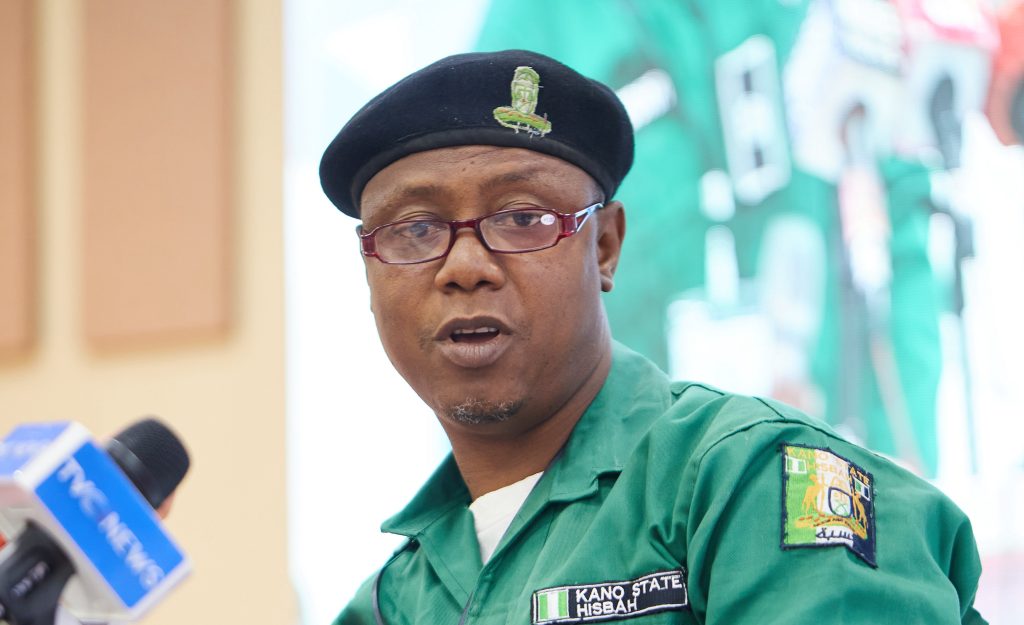
For some women and children experiencing violence in Kano, the first institution approached may not be the police, a hospital or a social welfare office. Families may first turn to the Kano State Hisbah Board for intervention, guidance or help resolving a situation within the community.
That position makes Hisbah an important part of the protection pathway.
A complaint brought before the Board may involve a family dispute that can appropriately be addressed through counselling or mediation. It may also disclose sexual violence, serious physical abuse or harm to a child requiring medical attention, safeguarding, criminal investigation or other statutory intervention.
Our engagement today with the Kano State Hisbah Board examines this critical point of transition: how community-level intervention can support survivor protection while ensuring that cases requiring formal investigation and accountability are referred promptly to the appropriate institutions.
Recognising when protection must take precedence
Families seeking help do not always arrive with a clear understanding of what kind of intervention a case requires.
A report may initially be presented as a marital problem, family disagreement or community dispute. Further engagement may reveal physical violence, sexual abuse, coercion, threats or risk to a child.
The response at that stage matters.
Today’s discussion considers how frontline personnel can identify protection concerns early and distinguish matters suitable for counselling or mediation from cases that require intervention beyond Hisbah’s role.
Where a woman faces continuing violence, the immediate concern may be her safety. Where a child discloses sexual abuse, safeguarding and appropriate referral become urgent. Where conduct constitutes a serious criminal allegation, an informal settlement should not prevent the institutions responsible for investigation and prosecution from performing their functions.
The engagement therefore examines how survivor safety can remain central even where families are seeking reconciliation or community-based resolution.
Ensuring mediation does not replace accountability
Mediation and reconciliation have legitimate roles in resolving many family and community disputes.
Gender-based violence presents a different challenge.
Where serious violence is treated primarily as a dispute to be settled, pressure to reconcile can unintentionally place the burden of restoring peace on the person who has been harmed. Survivors may be encouraged to return to unsafe situations, withdraw complaints or accept arrangements that do not address continuing risk.
This is particularly concerning in cases involving children, who cannot be expected to negotiate their own protection.
A major focus of today’s engagement is therefore the boundary between mediation and formal accountability.
Hisbah can provide counselling, engage families and use its community presence to discourage harmful behaviour. At the same time, cases requiring medical treatment, child protection, police investigation or prosecution must be able to move into those systems without obstruction or unnecessary delay.
Clear institutional boundaries protect both survivors and the integrity of the institutions involved.
Strengthening referral from Hisbah to formal services
Because Hisbah may encounter survivors at an early stage, effective referral is central to its protective role.
A woman reporting violence may require healthcare, psychosocial support, social welfare intervention or police protection. A child may need immediate safeguarding. Sexual violence may require timely medical examination and documentation. Some cases may require legal assistance as they move through the justice process.
No single institution provides all of these services.
Today’s discussion examines how Hisbah can be more effectively connected to the health, social welfare, security and justice institutions responsible for different parts of the response.
Referral needs to be practical.
Frontline officers should understand which institution is responsible for which service, when urgent action is required and how a survivor can move from one institution to another without being repeatedly redirected or left to navigate the system alone.
Where a case is transferred, there must also be clarity about what happens next. A referral is only meaningful if the receiving institution is able to act and the survivor does not disappear between agencies.
Using community reach to strengthen prevention
Hisbah’s relevance to protection extends beyond responding after violence has occurred.
Its regular interaction with families and communities creates opportunities to reinforce messages around the protection of women and children, reporting of serious abuse and the responsibilities of families when someone discloses violence.
This complements the work already underway with imams, Islamic scholars and other community actors.
Religious and moral guidance can help challenge survivor-blaming, discourage concealment of abuse and reinforce the responsibility to protect children. Hisbah’s community-facing role can help translate those principles into practical action when individual cases arise.
The discussion therefore considers prevention and response together: strengthening community understanding while ensuring that a person who seeks help encounters a pathway capable of moving from guidance to protection and, where required, accountability.
Protecting survivors from pressure after disclosure
Reporting violence can also expose survivors to new forms of pressure.
Family members may seek to prevent a complaint from progressing. A survivor may be urged to accept reconciliation despite continuing safety concerns. An alleged perpetrator may attempt to influence the family or the survivor. Economic dependence may make it difficult for a woman to leave an unsafe situation.
Hisbah personnel may encounter these dynamics directly through their interaction with families.
Today’s engagement examines the importance of ensuring that interventions do not reinforce pressure on survivors or prioritise settlement over safety.
Where reconciliation is considered, it cannot replace necessary protection or criminal-justice action. A survivor’s vulnerability, the seriousness of the alleged conduct and the risk of further harm must remain central to decisions about referral and intervention.
Defining Hisbah’s place within a coordinated protection system
The Kano State Hisbah Board occupies a distinctive position within Kano’s protection landscape.
It is neither simply a religious institution nor a substitute for the police, courts, health system or social welfare services. Its significance lies in its proximity to communities and its ability to encounter cases at an early stage, when appropriate intervention can determine what happens next.
Today’s engagement therefore focuses on three practical priorities: clearer identification of cases requiring formal intervention, stronger referral to health, social welfare, security and justice institutions, and a survivor-centred approach to mediation and community response.
These priorities also contribute to the wider work towards a multi-sector coordination and accountability framework for survivor protection, in which each institution understands both its own responsibilities and the point at which another institution must act.
For Hisbah, the objective is not to extend its mandate into functions belonging to other institutions.
It is to ensure that when women and children seek help through a structure they already know and trust, that first point of contact becomes a reliable route to the protection and accountability they require.