
On International Women’s Day 2021, Lift Africa Foundation brought together students, teachers, and local advocates at Government Girls Science and Technical College (GGSTC), Kano, for a transformative engagement centered on education, empowerment, and gender justice.
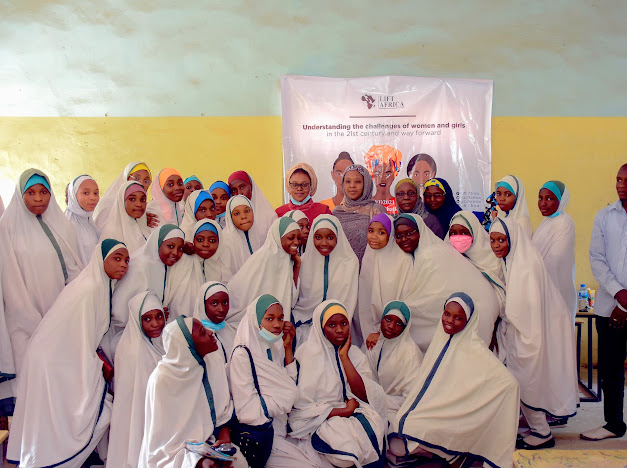
The interactive forum explored the year’s theme — “Understanding the Challenges of Women and Girls in the 21st Century: The Way Forward” — through a local lens. Discussions focused on how access to education, information, and opportunity can help Nigerian girls shape their futures and become leaders within their communities.

More than 200 students and 15 staff members participated in the event. Speakers, including Lift Africa’s program leads and youth advocates, emphasized the urgency of addressing sexual and gender-based violence (SGBV), ending child marriage, and expanding girls’ access to STEM education — key areas where deep-rooted inequalities continue to hold girls back across Northern Nigeria.
⸻

“When we educate a girl, we transform a generation,” said Aisha Hamman, Founder and Executive Director of Lift Africa Foundation. “Our mission is not only to help girls stay in school but to help them find their voice, claim their rights, and lead the change their communities deserve.”
⸻
During the event, Lift Africa Foundation presented new data revealing that girls represent nearly 60% of Nigeria’s out-of-school children, even though women make up more than half of the national population.
Participants also discussed the low national average of 6.7% female representation in political leadership, far below the global benchmark of 22.5%, and reflected on how these systemic inequalities impact girls’ everyday realities.
These figures sparked impassioned discussions about the cultural, structural, and economic barriers that silence women’s voices — and how communities can work together to rewrite the narrative.
Lift Africa facilitators guided small-group reflections where students proposed community-driven solutions such as:
• Engaging traditional and religious leaders to support girls’ education.
• Strengthening school-based gender clubs.
• Creating safe reporting systems for cases of SGBV.
• Advocating for the enforcement of the Child Rights Act and VAPP Law in their states.

The session also featured Lift Africa’s flagship initiatives — From Streets to Classrooms and Clear Her Path — both addressing the root causes of girls’ exclusion from education. The programs combine legal advocacy, economic empowerment, and psychosocial support to ensure that girls not only return to school but thrive there.
“I have learned that our rights are not gifts — they are ours to claim,” said Zainab, an SS2 student participant. “Now I know I can speak up for myself and for other girls.”
⸻
By connecting local education realities with broader gender justice frameworks, Lift Africa Foundation reaffirmed its commitment to nurturing a generation of informed, confident, and empowered young women who can transform their communities.
As the event concluded, school administrators pledged to integrate more leadership and gender-based programs into their extracurricular activities, while students joined Lift Africa’s youth advocacy network to sustain the momentum beyond the classroom.
⸻
Through engagements like this, Lift Africa Foundation continues to bridge the gap between education and justice — ensuring that every girl, regardless of background, can learn, lead, and live free from fear and discrimination.