
Kano State has 44 local government areas and only one Sexual Assault Referral Centre providing specialised services to survivors of sexual violence.
For a survivor outside metropolitan Kano, that gap can mean travelling considerable distances to reach specialised care, bearing transport costs at a moment of crisis, or trying to navigate several institutions without a clear referral pathway. For a child who has experienced abuse, delays can carry additional protection, medical and evidentiary consequences.
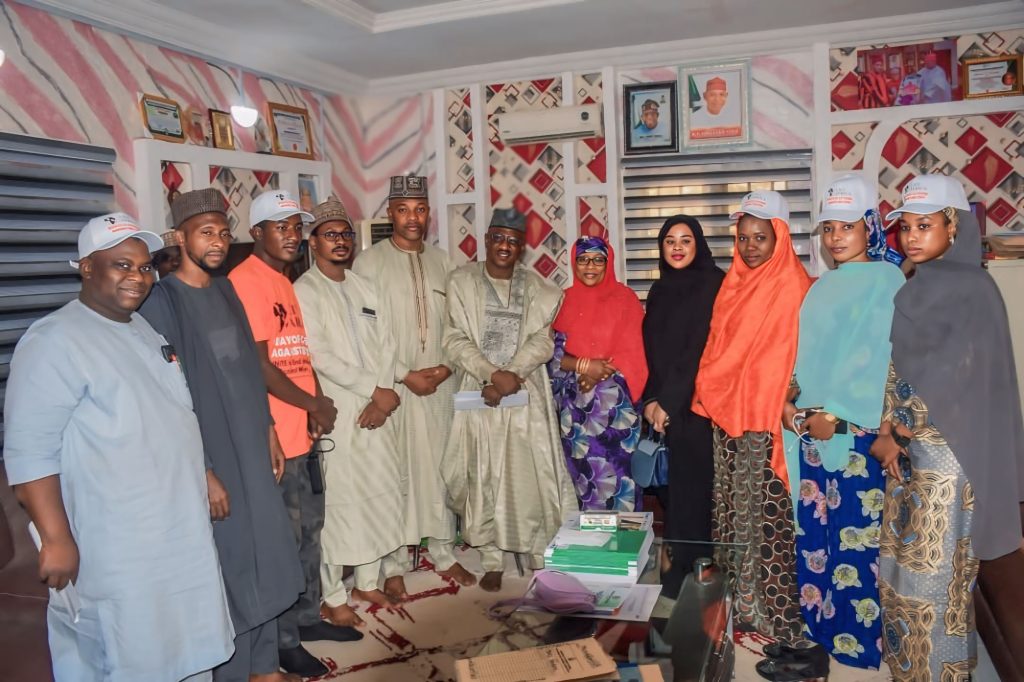
These realities are at the centre of our engagement today with the Kano State Ministry of Women Affairs, where discussions focus on the accessibility of survivor-support services, gaps in referral and case coordination, and the wider institutional response available to women and children experiencing violence.
The Commissioner acknowledges the limitations in the current reach of survivor-support infrastructure and the need for stronger coordination between the institutions responsible for social welfare, health, security and justice.
When services exist but remain difficult to reach
The availability of a service does not necessarily mean that every survivor can access it.
For women and children living outside metropolitan Kano, distance from specialised services can become a significant barrier. Transport costs, lack of information about available support, stigma and family circumstances can all affect whether and how quickly a survivor reaches appropriate care.
In cases of sexual violence, time matters. Survivors may require urgent medical attention, while timely examination and documentation can also become important to subsequent investigation and prosecution. Children may require immediate safeguarding to prevent further exposure to harm.
Today’s discussion therefore looks beyond the existence of services to their practical reach across the state.
The challenge is not simply to have survivor-support infrastructure, but to ensure that women and children can access appropriate support regardless of where they live and can move from disclosure or reporting into the services they require without unnecessary delay.
The limited reach of specialised services also raises a broader question about how existing health and social welfare structures across Kano can be better connected to survivor-support pathways, particularly where specialised intervention is not immediately available within a community.
Strengthening the referral pathway
A survivor of gender-based violence rarely requires support from only one institution.
A health facility may provide medical care and documentation. Police may investigate an alleged offence. Social welfare officers may assess immediate protection needs. Psychosocial support may be required. Legal assistance may become necessary as a case progresses through the justice system.
For children, safeguarding responsibilities can involve several actors simultaneously.
Yet these services operate across different institutions, with different mandates and procedures. When the connections between them are weak, survivors and their families can be left to determine for themselves where to go next.
A major focus of today’s engagement is therefore the need for clearer referral links between social welfare, health, police and justice institutions.
Effective referral requires more than directing a survivor from one office to another. There must be clarity about the service required, the institution responsible for providing it, how urgent protection needs are communicated, and how follow-up occurs after a case has been referred.
Without that continuity, a survivor can fall between institutions even where each agency has performed part of its individual responsibility.
The discussion examines how stronger case coordination can reduce this fragmentation and ensure that referral functions as a pathway through the protection system rather than a series of disconnected institutional contacts.
Keeping the survivor at the centre of the response
The consultation also considers the circumstances that can make women and children particularly vulnerable after violence occurs.
A child depends on adults and institutions to recognise risk and act in their best interests. A woman may face family pressure, economic dependence, stigma or other circumstances that affect her ability to seek services or remain engaged with a case.
These realities mean that survivor protection cannot be treated solely as an extension of criminal prosecution.
Accountability for perpetrators is essential, but survivors may have immediate health, psychosocial, protection and social welfare needs that exist alongside the justice process.
The Ministry of Women Affairs occupies an important position within this response because its responsibilities intersect with women, children, families, social welfare and protection. Its role is therefore particularly relevant to the question of continuity: how survivors are supported after disclosure, how protection needs are identified, and how cases requiring several institutional responses are coordinated.
Today’s discussion examines how this role can be strengthened through clearer relationships with health facilities, security agencies, justice institutions and other actors involved in survivor response.
Legal protection and services must advance together
Kano’s unfinished legal reform process also forms part of the engagement.
For several years, we have advocated for stronger legal protection against gender-based violence. Key protections associated with the Violence Against Persons Prohibition framework have been harmonised into the Kano State Penal Code Amendment Bill 2021, but the legislative process remains incomplete.
Completing that reform remains important.
A stronger legal framework can clarify protections, offences and institutional responsibilities. But legislation alone cannot ensure that a survivor receives medical attention, psychosocial support, social welfare intervention or effective referral when violence occurs.
Conversely, survivor-support services operate within a wider legal and justice framework that must be capable of protecting rights and pursuing accountability.
The discussion therefore reinforces the need to advance legal protection and survivor-support systems together, rather than treating either as sufficient on its own.
Towards a more coordinated survivor-protection system
Today’s engagement also advances discussion on a broader multi-sector coordination and accountability framework for survivor protection.
The need for such a framework reflects a practical reality: no single institution controls the entire response to gender-based violence.
Women Affairs has responsibilities relating to social welfare and protection. Health institutions provide medical care and documentation. Security agencies investigate. Justice institutions pursue criminal accountability. Community and religious structures can influence disclosure, early response and referral.
The challenge lies in ensuring that these responsibilities connect.
A coordinated framework can help clarify institutional roles, strengthen referral relationships, improve follow-up and establish greater accountability for what happens when responsibility moves from one institution to another.
For the Ministry of Women Affairs, this means strengthening the part of the protection system that surrounds the survivor: ensuring that immediate needs are recognised, services are accessible, referrals lead somewhere, and women and children are not left to navigate institutional gaps on their own.
The priority emerging from today’s engagement is therefore clear: to close the distance between the existence of survivor-support services and a survivor’s ability to reach and move through them when protection is needed.
That is essential to building a protection system that works not only institution by institution, but from the perspective of the women and children it is intended to serve.
Accountability for perpetrators is essential, but survivors may have immediate health, psychosocial, protection and social welfare needs that exist alongside the justice process.
The Ministry of Women Affairs occupies an important position within this response because its responsibilities intersect with women, children, families, social welfare and protection. Its role is therefore particularly relevant to the question of continuity: how survivors are supported after disclosure, how protection needs are identified, and how cases requiring several institutional responses are coordinated.
Today’s discussion examines how this role can be strengthened through clearer relationships with health facilities, security agencies, justice institutions and other actors involved in survivor response.
Legal protection and services must advance together
Kano’s unfinished legal reform process also forms part of the engagement.
For several years, we have advocated for stronger legal protection against gender-based violence. Key protections associated with the Violence Against Persons Prohibition framework have been harmonised into the Kano State Penal Code Amendment Bill 2021, but the legislative process remains incomplete.
Completing that reform remains important.
A stronger legal framework can clarify protections, offences and institutional responsibilities. But legislation alone cannot ensure that a survivor receives medical attention, psychosocial support, social welfare intervention or effective referral when violence occurs.
Conversely, survivor-support services operate within a wider legal and justice framework that must be capable of protecting rights and pursuing accountability.
The discussion therefore reinforces the need to advance legal protection and survivor-support systems together, rather than treating either as sufficient on its own.
Towards a more coordinated survivor-protection system
Today’s engagement also advances discussion on a broader multi-sector coordination and accountability framework for survivor protection.
The need for such a framework reflects a practical reality: no single institution controls the entire response to gender-based violence.
Women Affairs has responsibilities relating to social welfare and protection. Health institutions provide medical care and documentation. Security agencies investigate. Justice institutions pursue criminal accountability. Community and religious structures can influence disclosure, early response and referral.
The challenge lies in ensuring that these responsibilities connect.
A coordinated framework can help clarify institutional roles, strengthen referral relationships, improve follow-up and establish greater accountability for what happens when responsibility moves from one institution to another.
For the Ministry of Women Affairs, this means strengthening the part of the protection system that surrounds the survivor: ensuring that immediate needs are recognised, services are accessible, referrals lead somewhere, and women and children are not left to navigate institutional gaps on their own.
The priority emerging from today’s engagement is therefore clear: to close the distance between the existence of survivor-support services and a survivor’s ability to reach and move through them when protection is needed.
That is essential to building a protection system that works not only institution by institution, but from the perspective of the women and children it is intended to serve.