
Religious leaders can shape how communities understand violence, respond to survivors and decide whether serious cases are reported. But sustained change requires more than the influence of individual scholars or imams. It also requires institutions capable of coordinating that influence, connecting religious structures with government systems and ensuring that protection messages reach communities consistently.
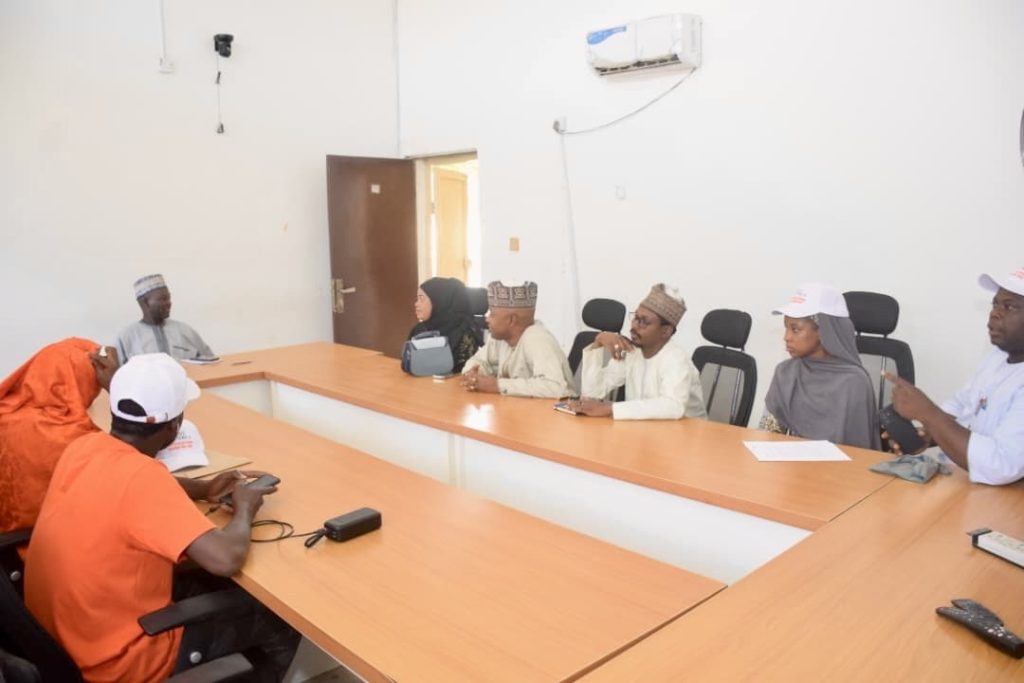
These questions are at the centre of our engagement today with the Kano State Ministry of Religious Affairs, where discussions focus on the role government can play in strengthening the contribution of religious institutions to the prevention of violence against women and children, survivor protection and appropriate referral.
The engagement builds on our consultations with the Kano State Council of Imams and the Kano State Council of Ulama, which have examined how sermons, religious guidance and Islamic scholarship can challenge stigma, discourage the concealment of abuse and help families recognise when formal intervention is required.
Today’s conversation moves that work to another level: how these efforts can be supported and coordinated institutionally rather than remaining dependent on individual religious leaders or isolated engagements.
Moving from individual influence to coordinated religious engagement
Mosques, Islamic scholars and other religious structures have extensive reach across Kano State. They are present in communities where formal protection services may be less visible, and they regularly engage families on questions of morality, responsibility, family life and social conduct.
That reach creates an important opportunity for prevention.
It also raises the question of consistency.
Where religious leaders receive different information about gender-based violence, referral pathways or the responsibilities of formal institutions, community responses can vary considerably. Some families may be encouraged to report immediately, while others may remain within informal processes even where medical, safeguarding or justice intervention is required.
Today’s discussion examines how the Ministry’s relationship with religious institutions can support more consistent engagement around the protection of women and children.
This includes the potential for coordinated messaging on the responsibility to report serious abuse, the importance of protecting children who disclose violence, the need to challenge survivor-blaming and the distinction between religious counselling and matters requiring professional or statutory intervention.
The objective is not to prescribe sermons or replace the independence of religious leadership. It is to strengthen the institutional environment in which religious actors receive accurate information, understand referral pathways and contribute to a shared protection objective.
Connecting religious institutions with formal protection services
A recurring challenge from our work with survivors is that trusted community structures and formal services often operate separately.
A family may seek guidance from an imam or Islamic scholar without knowing where to obtain specialised medical care, social welfare support or legal assistance. A religious leader may recognise that a case requires further intervention but lack a clear connection to the institution responsible for responding.
These gaps can delay protection.
The engagement therefore examines the Ministry’s potential role in strengthening links between religious institutions and the health, social welfare, security and justice systems.
This is particularly important in cases involving sexual violence or abuse of children, where timely medical attention, safeguarding and investigation may be necessary.
Religious institutions do not need to perform the functions of government agencies. Their role can be strengthened by ensuring that when those functions are required, families are directed towards them promptly and appropriately.
A more structured relationship between religious actors and formal protection institutions can also improve clarity around where responsibility changes hands. Religious guidance may support a survivor and family at community level, while the next stage of the response belongs to health professionals, social welfare officers, investigators, prosecutors or other mandated actors.
Addressing harmful practices through trusted institutions
The discussion also considers the role of religious institutions in addressing social practices that discourage disclosure or accountability.
Survivors can face pressure to remain silent because of concerns about family reputation, marriage prospects or community stigma. In some cases, serious violence may be treated as a private matter that should not leave the family.
Where such practices are perceived as religiously sanctioned, they become more difficult to challenge.
Religious institutions therefore have an important role in reinforcing the distinction between harmful social practices and principles of justice, dignity and protection.
Through sustained engagement with imams, scholars and other religious leaders, the Ministry can help create an environment in which protection messages are reinforced across communities rather than communicated only through individual advocacy initiatives.
This is particularly important for long-term social and behavioural change. Community attitudes rarely change because of a single campaign or meeting. They change through repeated messages from institutions and people whose authority is recognised and trusted.
Strengthening the government–religious institution interface
Today’s engagement also examines the broader relationship between government and religious institutions in the protection of women and children.
Several government institutions have distinct responsibilities when violence occurs. Health institutions provide medical care. Social welfare services address protection and support needs. Security agencies investigate. Justice institutions pursue accountability.
The Ministry of Religious Affairs occupies a different position. Its value lies in its relationship with the religious structures that shape community attitudes and influence behaviour.
Strengthening this interface can help bring community prevention and formal protection closer together.
The discussion considers how the Ministry can support communication between religious actors and other government institutions, promote greater understanding of referral mechanisms and contribute to coordinated prevention efforts without creating overlapping mandates.
This approach is particularly relevant to the wider work underway to strengthen Kano’s protection system. Religious leaders can influence whether abuse is recognised and reported; government institutions determine what happens once formal intervention begins. Both sides of that pathway need to connect.
Towards a more sustained religious-sector contribution to protection
The priority emerging from today’s engagement is to move beyond one-off consultation towards a more structured role for religious institutions within Kano’s wider protection response.
This includes sustained engagement with imams and scholars, clearer understanding of referral pathways, consistent messaging around survivor dignity and accountability, and stronger connections between religious structures and the government institutions responsible for protection and justice.
The Ministry of Religious Affairs has an important role in helping organise that interface.
The objective is not to create a separate religious protection system. It is to ensure that the influence religious institutions already exercise within communities contributes consistently to prevention, early reporting and appropriate referral.
When religious authority, community responsibility and formal institutions are better connected, survivors are less likely to be lost at the point between disclosure and protection.
Strengthening that connection is central to building a protection system that reaches women and children not only through government institutions, but through the trusted structures that shape everyday community life.