
Strong laws and institutional commitments cannot protect women and children if the systems responsible for delivering them are not adequately planned and financed.
A survivor may have a legal right to protection, but that right has limited practical value if specialised services are inaccessible, frontline institutions lack the resources to respond, referral systems are weak, or commitments made by government agencies are not reflected in budgets and implementation plans.
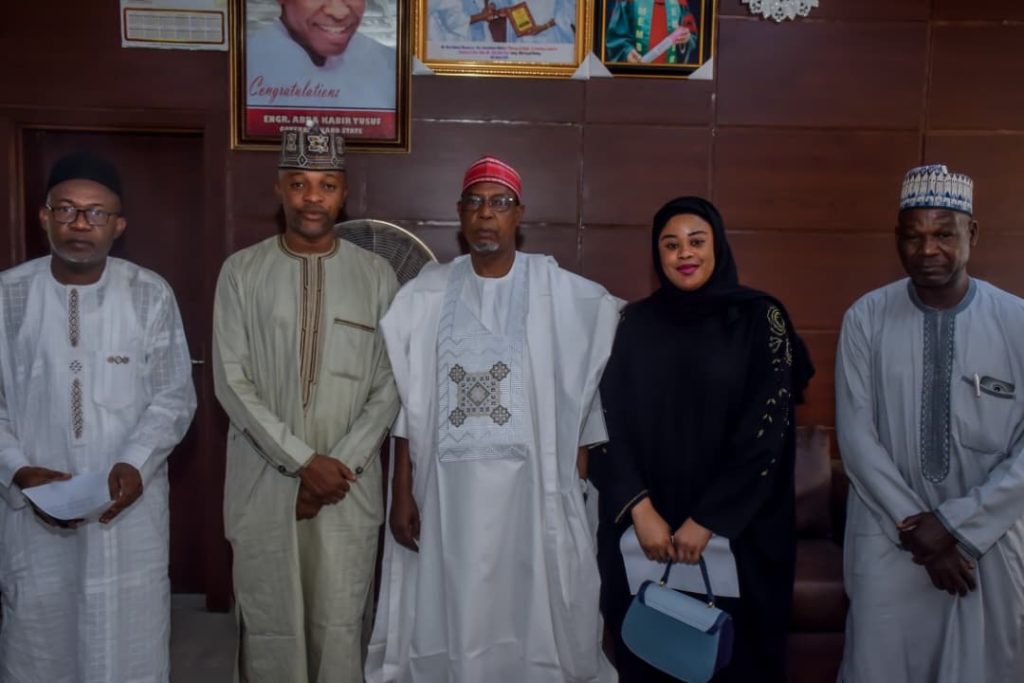
These questions are at the centre of our engagement today with the Kano State Ministry of Budget and Planning, where discussions focus on how gender-based violence prevention, survivor protection and child safeguarding can be better reflected in the State’s planning and resource-allocation processes.
The engagement brings an important dimension to the wider reform conversation in Kano: moving from identifying institutional gaps to examining what it will take to finance and sustain the systems required to address them.
From institutional responsibility to funded implementation
Across our engagements with justice, social welfare, religious and community institutions, a consistent issue is becoming clear: different actors have responsibilities for protecting women and children, but fulfilling those responsibilities requires resources.
Health institutions need the capacity to provide timely and appropriate survivor care. Social welfare services require personnel and systems capable of responding to protection concerns. Schools need safeguarding mechanisms. Security and justice institutions require the capacity to investigate and prosecute cases effectively. Referral systems require coordination, information and follow-up.
These responsibilities cannot be sustained through policy commitments alone.
Today’s discussion therefore examines how protection priorities are translated into government planning, budget lines and expenditure decisions, and whether the resources available to institutions correspond with the responsibilities expected of them.
The objective is not simply to advocate for increased spending. It is to ensure that public resources are linked to clearly identified protection gaps and directed towards interventions capable of improving access, coordination and institutional response.
Addressing the gap in survivor-support infrastructure
The limited availability of specialised survivor services in Kano is one of the issues informing the discussion.
With 44 local government areas and only one Sexual Assault Referral Centre, access to specialised care remains particularly difficult for survivors outside metropolitan Kano.
The challenge is both institutional and financial.
Expanding access may require investment in infrastructure, trained personnel, medical and psychosocial services, referral capacity and stronger links between specialised services and existing health and social welfare structures across the state.
The consultation examines how these needs can be considered within wider state planning rather than addressed only when individual cases or emergencies expose existing gaps.
This includes looking at how government can identify priority investments, determine which institutions require additional capacity and ensure that survivor-support services are treated as part of essential protection infrastructure.
Budgeting across institutional boundaries
Gender-based violence does not fall neatly within the mandate or budget of a single ministry.
A single case may involve Women Affairs, Health, Education, Justice, the police and other protection actors. Prevention may also require sustained engagement with religious, traditional and community structures.
This creates a planning challenge.
Where institutions develop priorities independently, critical gaps can remain at the points where their mandates intersect. One ministry may fund a service without adequate resources for referral. Another may have statutory responsibilities without the operational capacity to fulfil them. Activities may be financed individually without sufficient provision for the coordination required to make the wider system function.
Today’s engagement therefore examines the need to connect institutional planning across sectors.
A more coherent approach requires identifying which components of survivor protection belong within each institution, what resources are necessary to deliver them, where responsibilities overlap and where coordinated investment is required.
This is particularly important for referral systems, which depend on several institutions functioning together rather than on the performance of one agency alone.
Planning for implementation, not only commitments
The discussion also considers the relationship between budgeting and the wider legal and policy reform process.
For several years, we have advocated for stronger protections against gender-based violence, including the harmonisation of key provisions of the Violence Against Persons Prohibition framework into the Kano State Penal Code Amendment Bill 2021.
Completing the legislative process remains important. But stronger legal obligations will also create implementation responsibilities.
Where legislation assigns duties to government institutions, those duties need to be reflected in planning, staffing, service provision and budget allocations if they are to produce meaningful protection.
This is why the Ministry of Budget and Planning is central to the reform process.
Its role extends beyond financing individual programmes. State planning determines whether identified protection needs are translated into priorities, whether institutions have realistic implementation frameworks and whether commitments can be sustained beyond individual projects or advocacy cycles.
Today’s discussion therefore focuses on the need to connect legal reform, institutional responsibility and public financing from the outset.
Making protection measurable within government planning
Effective budgeting also requires clarity about what government is trying to achieve.
Allocating resources to survivor protection should be accompanied by measurable expectations: whether services are becoming more accessible, whether referral is functioning, whether institutions have the necessary personnel and capacity, and whether women and children outside metropolitan Kano are able to reach support.
The engagement considers the importance of moving from broad commitments to identifiable actions that can be planned, costed and monitored.
This includes understanding the resource implications of strengthening survivor-support services, improving child safeguarding, expanding institutional capacity and supporting coordination between the agencies responsible for prevention, protection and accountability.
A multi-sector response becomes more credible when institutions know not only what they are expected to do, but what implementation requires and how progress will be assessed.
Financing a protection system that can function
Today’s engagement reinforces an essential principle in the wider work to strengthen gender justice in Kano: protection must be planned and financed as a system.
Justice institutions cannot deliver accountability without investigative and prosecutorial capacity. Social welfare institutions cannot protect survivors without adequate services and personnel. Health facilities cannot provide appropriate care without resources. Schools cannot implement safeguarding responsibilities without systems and capacity to support them.
The Ministry of Budget and Planning therefore occupies a critical place in translating institutional responsibilities into implementable government action.
The discussion advances the need for protection priorities to be reflected more deliberately in state planning and budgeting, alongside clearer coordination between the institutions whose mandates intersect.
As work continues towards a broader multi-sector coordination and accountability framework for survivor protection, the financing question must remain central.
Commitments define what institutions intend to do.
Planning and budgeting determine whether they can do it.