
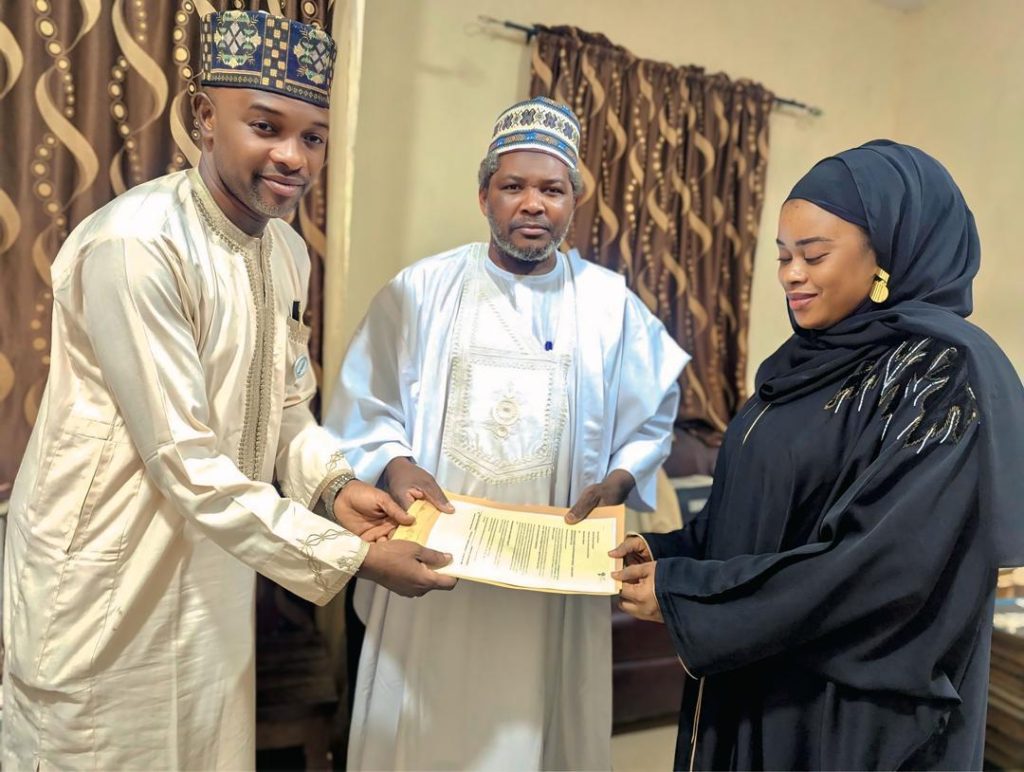
Protecting women and children requires more than strong laws and functioning institutions. It also requires confronting the beliefs, social expectations and community practices that shape what happens when violence occurs.
Today’s engagement with the Kano State Council of Ulama, led by Sheikh Ibrahim Khalil, focuses on the role religious scholarship can play in strengthening protection for women and children, challenging harmful social norms, and reinforcing community responsibility for reporting abuse and supporting survivors.
The Council of Ulama occupies an important place in Kano’s social and religious life. Through scholarship, religious guidance and engagement with communities, Islamic scholars help shape public understanding of questions involving justice, dignity, family responsibility and the treatment of vulnerable people.
That influence matters in situations where survivors face pressure to remain silent, where families fear the consequences of reporting abuse, or where harmful practices are defended as religiously acceptable despite being rooted in social convention rather than religious principle.
Addressing the beliefs that shape responses to violence
Our work with survivors continues to show that violence does not occur in isolation from the social environment around it.
A survivor may disclose abuse and encounter disbelief. A family may be more concerned about stigma or reputation than immediate protection. Parents may hesitate to report sexual abuse involving a child because they fear social consequences. Serious offences may be treated as private family matters even when medical, protective or criminal justice intervention is required.
These responses can determine whether a survivor reaches help at all.
Today’s discussion examines how respected religious scholarship can contribute to changing this environment by reinforcing principles of justice, responsibility, dignity and protection.
Islamic scholars can play an important role in challenging narratives that place responsibility for violence on survivors or suggest that concealing abuse is necessary to preserve family honour. They can help distinguish between harmful social practices and legitimate religious principles, particularly where cultural expectations are presented as religious obligations.
The engagement also considers the particular vulnerability of children, whose access to protection depends largely on how adults respond when abuse is disclosed.
Where a child reports sexual or physical abuse, the priority must be protection from further harm. Religious and community guidance can help reinforce that responsibility and challenge attitudes that encourage silence, minimisation or concealment.
From religious guidance to practical protection
Religious authority is particularly significant because families often seek guidance from scholars before approaching formal institutions.
What happens at that point can influence whether a case moves towards protection or remains within an informal process.
Today’s engagement therefore examines the practical responsibilities that arise when a religious leader becomes aware of violence or abuse.
Religious scholars can provide counselling and guidance, encourage families to support survivors, discourage attempts to conceal serious harm and reinforce the importance of reporting where formal intervention is required.
At the same time, clear institutional boundaries are essential.
Medical professionals are responsible for treatment and documentation. Social welfare institutions address protection and support needs. Security agencies investigate allegations within their mandates. Prosecutors and courts perform the functions required for criminal accountability.
Religious leaders do not replace these institutions.
Their role is to help ensure that trusted community guidance does not become the point at which a survivor’s pathway to formal protection ends.
Where medical care, safeguarding, investigation or prosecution is required, timely referral is critical.
Challenging the gap between social acceptance and legal protection
The discussion also connects community attitudes with Kano’s wider legal reform process.
For several years, we have advocated for stronger legal protections against gender-based violence. Key provisions from the Violence Against Persons Prohibition framework have been harmonised into the Kano State Penal Code Amendment Bill 2021, while the legislative process remains unfinished.
Completing that reform remains important.
But our experience also shows that legal provisions alone cannot overcome the social barriers that prevent survivors from using them.
A law may provide protection, but that protection has limited practical value if a survivor is prevented from reporting. A criminal offence may be clearly defined, but accountability becomes difficult where families are pressured to conceal what happened. Formal institutions may exist, but survivors cannot benefit from them if trusted community actors direct them away from appropriate services.
This is why legal reform and social legitimacy must advance together.
Religious scholars are well placed to contribute to that process by helping communities understand that protecting survivors, reporting serious abuse and allowing formal institutions to perform their responsibilities are consistent with the principles of justice and protection.
Strengthening the relationship between religious authority and formal institutions
Today’s engagement identifies a clear area for continued work: strengthening the relationship between religious leadership and the institutions responsible for survivor protection and accountability.
This includes improving understanding of referral pathways, encouraging timely reporting and ensuring that religious or community counselling does not substitute for professional intervention where a case requires it.
The objective is not to draw religious scholars into the statutory functions of government institutions. It is to recognise the influence they already hold and ensure that this influence supports protection rather than silence.
Religious leadership can help shape the social environment in which laws and institutions must operate.
Where respected scholars challenge stigma, reject the concealment of abuse and reinforce the responsibility to protect women and children, they can help create conditions in which survivors are more likely to be believed, supported and connected to the services they need.
Strengthening that connection between religious authority, community responsibility and formal protection is central to building a system in which survivors are not left to navigate the consequences of violence alone.